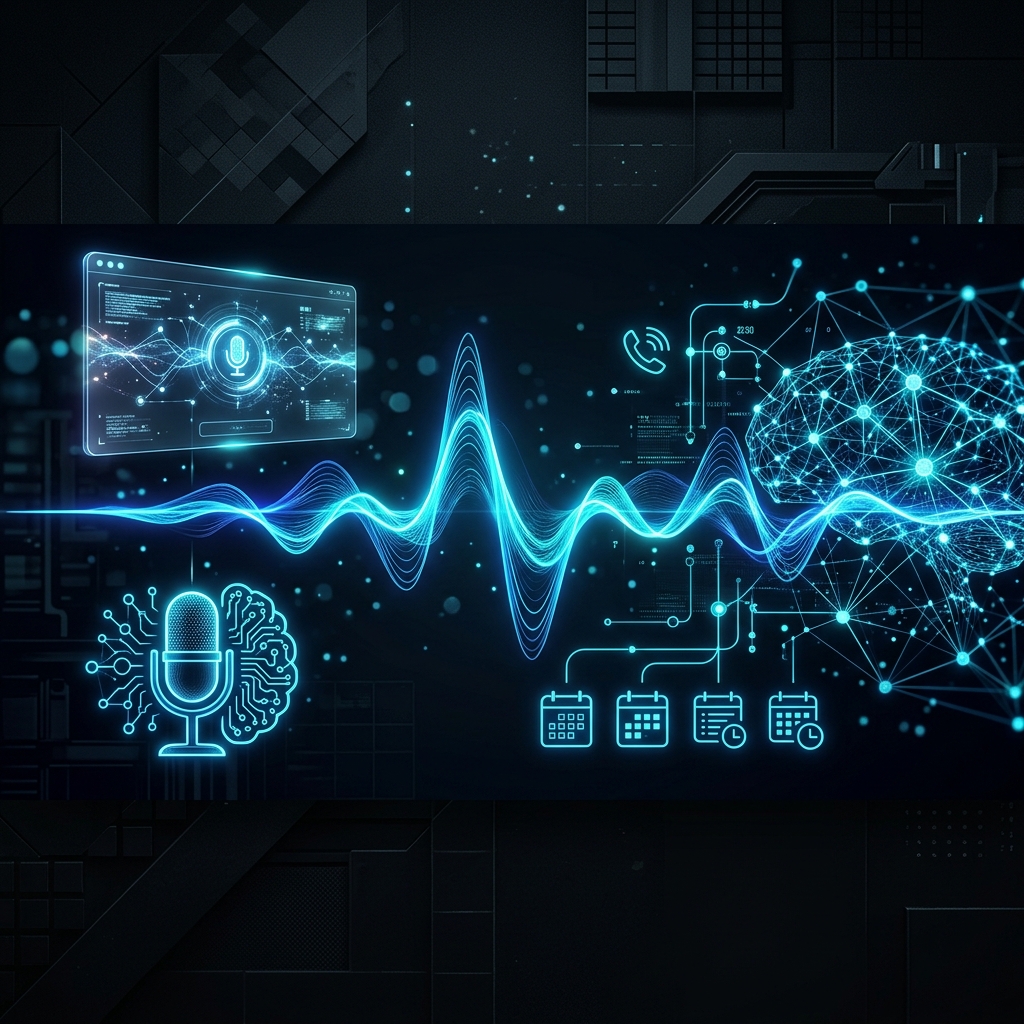
Never miss a lead again. Discover how AI voice agents handle calls with human-like latency, qualifying leads across time zones.
The Problem with Missed Calls
In a global market, business happens 24/7. Missing a call at 3 AM your time might mean losing a massive enterprise deal in another timezone. Traditional answering services are slow, expensive, and often frustrate callers who realize they are speaking to a remote switchboard operator.
Human-like Latency and Emotion
Our AI voice agents operate with sub-800ms latency. They don't sound like robotic legacy IVR systems ("Press 1 for Sales, Press 2 for Support").
They use advanced LLMs (like GPT-4o or Claude 3.5 Sonnet) connected to ultra-fast Text-to-Speech (TTS) pipelines. The result? They use brand-aligned voice clones, understand interruptions, back-channel ("uh-huh", "I see"), and respond with appropriate emotion and pacing.
How it Works Under the Hood
- Speech-to-Text (STT): High-fidelity transcription happening in milliseconds.
- Intent Classification: The LLM analyzes the transcript to understand exactly what the user wants.
- Knowledge Retrieval: Querying a Vector Database (RAG) to find your company policies or product specs.
- Text-to-Speech (TTS): Synthesizing the response back into audio with human-like prosody.
Actionable Outcomes
The AI doesn't just take a message. It acts as a highly-trained SDR (Sales Development Representative). It asks qualifying questions ("What is your current monthly ad spend?"), routes urgent calls to on-call staff dynamically, schedules appointments directly into your Calendly or Google Calendar, and sends automated SMS summaries post-call.